
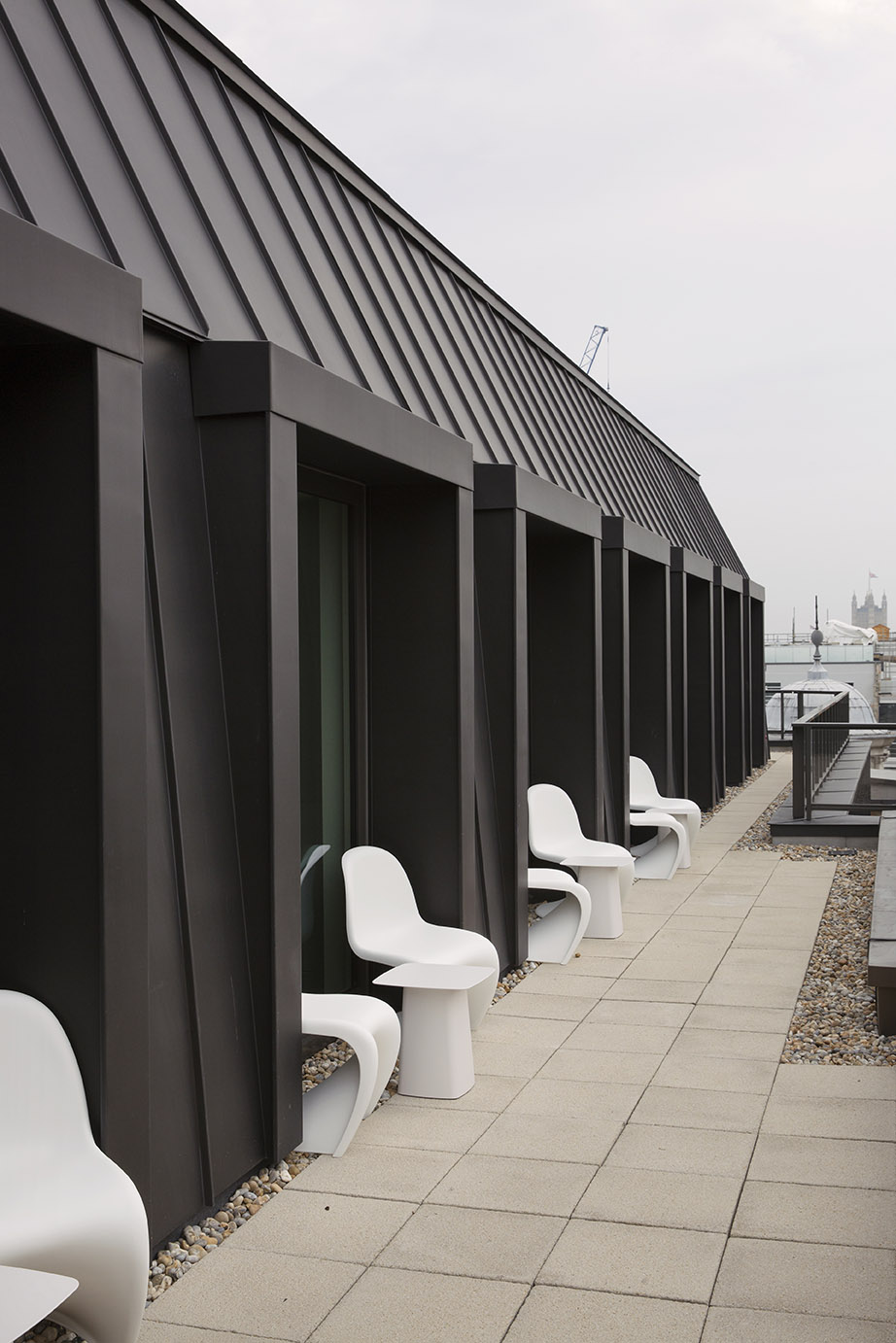
Commercial construction projects demand tight coordination, particularly where multiple roofing and façade systems interface in complex ways. When these disciplines are split between several subcontractors, communication gaps, programme delays and interface issues can quickly arise.
To avoid this, many main contractors and developers now appoint a dedicated envelope contractor to deliver the complete external package under a single contract.
Combining roofing and façade disciplines within one coordinated structure improves communication, enhances quality control, reduces risk and increases overall efficiency.
What Is a Building Envelope Contractor?
A building envelope contractor treats the external fabric of the building as a single, integrated package. Rather than appointing separate firms for flat roofing, pitched roofing and cladding, the client engages one specialist, multidisciplined contractor to deliver the full scope.
The building envelope protects the structure from weather and environmental exposure, manages moisture and temperature, and plays a critical role in energy efficiency and longterm durability. A fully integrated envelope solution may include:
- Waterproofing systems
- Industrial roofing
- Rainscreen cladding
- Hard metal roofing
- Pitched roofing
- Façade systems
- Louvres and screening
- Substrates and support systems
- Man safe and fall protection systems
Managing these elements together helps ensure that all components interface correctly and reduces fragmentation across trades.
Richardson Projects provides both standalone and fully integrated envelope packages for commercial, retail and office developments across London.
Key Benefits of a Single-Envelope Contract
The primary advantage of appointing a single envelope contractor is simplicity. A coordinated roofing and cladding package reduces overlap between trades and creates clear lines of accountability.
Single Point of Contact
A single point of contact for the entire external envelope streamlines project management and improves communication.
Rather than dealing with multiple subcontractors, the main contractor works with one specialist team responsible for the wider envelope scope. This makes it easier to resolve decisions on sequencing, procurement, interfaces and installation, and reduces the risk of miscommunication.
Better Coordination Between Trades
All envelope disciplines directly influence each other:
- Cladding interfaces with roof buildups
- Waterproofing details affect façade performance
- Substrates determine installation tolerances
If these interfaces are poorly coordinated, relatively small issues can lead to costly downstream problems.
An integrated envelope solution ensures these systems are planned and delivered holistically, rather than in isolation. At Arundel House, Richardson delivered bespoke sheeting and cladding alongside louvres, zinc roofing and Sarnafil flat roofing systems across bridge links and canopy structures within one coordinated package.
Greater Programme Efficiency
Programme and sequencing challenges are often exacerbated when independent subcontractors are involved.
A coordinated envelope package enables better planning from the outset, so procurement, labour allocation, access and installation sequencing can be managed in tandem. This is particularly valuable on complex London schemes, where site logistics and working space are tightly constrained.
At Broadgate Circle, Richardson supplied industrial roofing systems including insulation, metal decking, louvres, mansafe systems and substrates as part of a highly coordinated commercial project.
Improved Cost Control
Splitting the roof and façade across multiple trades often increases preliminaries and introduces overlapping costs.
Engaging a single contractor for the full envelope allows efficiencies to be identified across design, access, prelims and procurement. This reduces duplication, improves budget visibility and supports more accurate cost control from tender through to completion.
How Envelope Contracting Reduces Main Contractor Risk
Reducing risk is one of the strongest reasons for appointing a building envelope contractor. Because the exterior involves multiple trades, gaps can easily appear in responsibility for warranties, interfaces and installation standards. A coordinated, contractor led approach significantly reduces that fragmentation.
Clear Accountability
One contractor managing the external package creates clear accountability from design through to handover. Instead of multiple subcontractors sharing responsibility for roofing, cladding, waterproofing and façade interfaces, a single specialist oversees the delivery of those systems together.
This improves traceability, reduces the likelihood of disputes and gives main contractors greater confidence in the overall package.
Consistent Quality Standards
Maintaining consistent quality across several trades is far easier when a single contractor oversees the wider envelope scope.
An experienced envelope contractor can ensure installation standards, detailing and workmanship remain consistent throughout the project. At Athene Place, Richardson delivered zinc roofing and cladding systems over complex concave and convex roof structures, including both timber and steel substrates, under one coordinated approach.
Reduced Interface Issues
Many envelope failures occur at interfaces between trades. Poor coordination, rather than faulty materials, often leads to water ingress, thermal bridging and premature deterioration.
By managing roofing, cladding, waterproofing and façade systems as one integrated package, the risk of interface failures is significantly reduced. This supports better long term performance and more robust warranties.
Richardson’s Integrated Envelope Approach
Richardson offers full building envelope solutions for commercial and industrial developments across London. Operating as a multidiscipline contractor, the company delivers multitrade roofing and specialist façade services within a single coordinated structure.
This enables clients to streamline delivery while still achieving high standards of design, installation, quality control and long term performance.
In-house Design and Installation
Richardson supports projects from early concept through to final installation. This integrated process improves buildability, coordination and technical consistency across the project lifecycle.
By bringing design and installation expertise together, practical construction issues are addressed from the outset, reducing the need for redesign and remedial works later in the programme. The company’s track record in technically demanding roofing and façade packages across London is reflected in its extensive portfolio of completed schemes.
Quality Assurance Across All Trades
Richardson’s integrated model provides consistent quality across roofing, cladding, waterproofing, substrates and associated systems. Managing these disciplines together gives greater control over sequencing, detailing, installation standards and final finishes.
Holistic management of the envelope package leads to more predictable outcomes, fewer defects and smoother handover.
A Smarter Way to Deliver Complex Envelope Projects
As commercial projects increase in complexity, main contractors and developers are placing greater emphasis on coordination, programme certainty and long term performance.
Appointing a specialist envelope contractor to deliver the full roofing and cladding package simplifies delivery and mitigates risk across the wider project. With a single coordinated team handling the external envelope, communication is clearer, quality standards are more consistent and project delivery is more efficient.
Richardson’s track record on complex London developments demonstrates the value of combining technical expertise, design capability and coordinated delivery under one roof.