
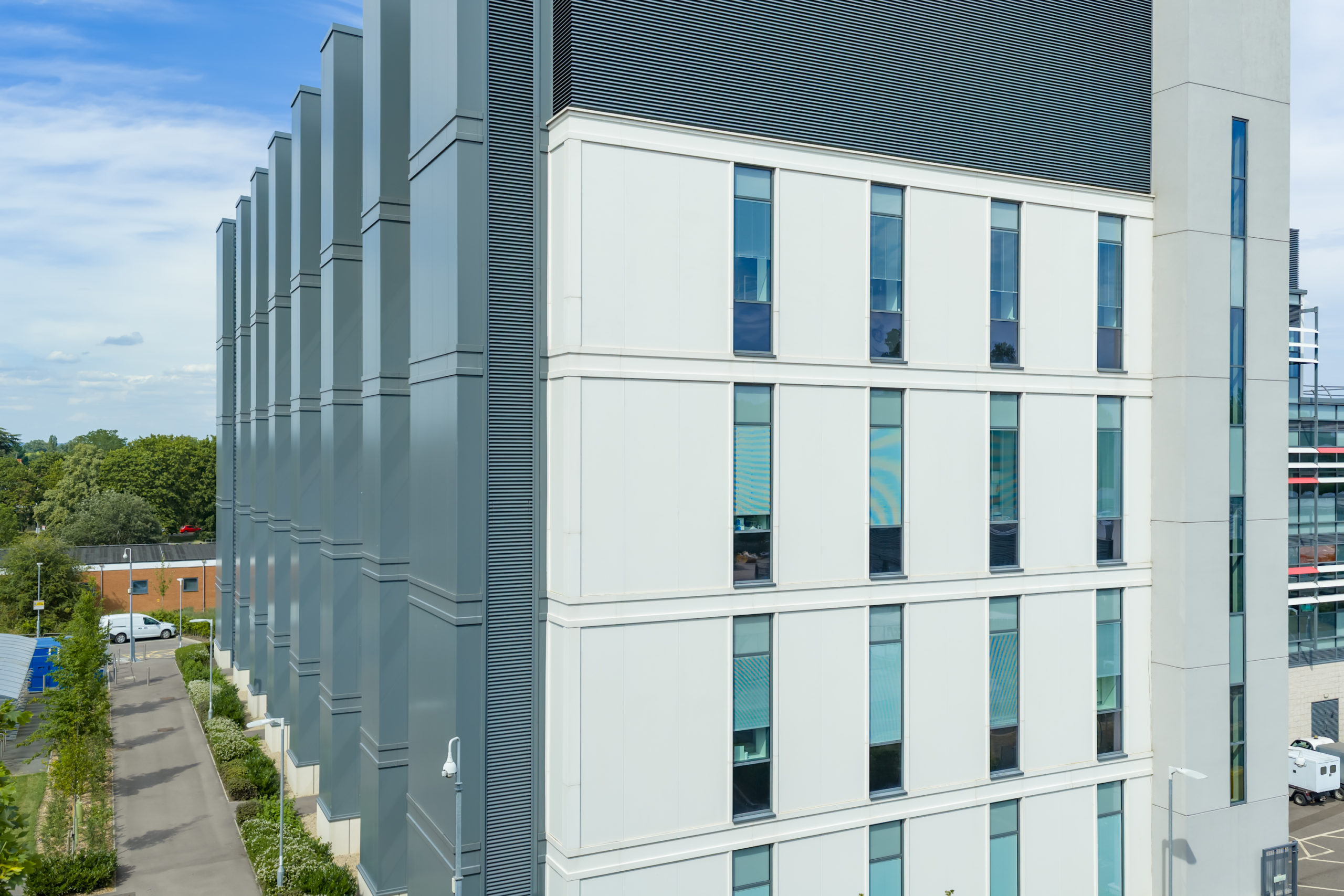
The outer envelope is critical to protect the building from the elements, enhance energy efficiency and support long-term performance. One of the most effective ways to do this is with rainscreen cladding.
If you’re planning a new development or upgrading an existing property, knowing how a rainscreen system works can help you make better decisions in terms of your building’s longevity, safety and maintenance costs. Across London and the South East, rainscreen systems have become a popular choice for schools, offices, public buildings and commercial developments, offering a combination of durability and a clean, contemporary look.
How Does Rainscreen Cladding Work?
The rainscreen system works by having multiple layers to protect the building rather than the traditional external walls. The outer cladding is the first line of defence against wind and rain. Behind the panels is a ventilated cavity where moisture can drain away and air can circulate naturally. Behind this is the insulation and the structure wall that is still protected from long-term water exposure.
This ventilated façade design very much reduces the risk of trapped moisture, helping to avoid mould, corrosion and long-term structural deterioration. It also aids thermal performance, allowing insulation to work better year-round.
Together, these components strengthen the overall building envelope, creating a façade that is robust, energy-efficient and simpler to maintain over its lifespan.
Proper cladding installation is vital to make sure each piece works as it should. Even a small installation error can impact drainage, ventilation or fire performance, so experienced specialists are an important part of any successful project.
Types of Rainscreen Cladding Systems
One of the reasons why rainscreen systems are so widely specified is the variety of materials available. Different finishes are required for different projects depending on appearance, budget, environmental exposure and performance requirements. Some of the most common systems include:
- Metal cladding, including aluminium and steel, which provides a modern appearance alongside excellent durability.
- ACM cladding panels, which are widely used where compliant, certified products meet current regulations and project specifications.
- Fibre cement panels that offer durability with a wide range of architectural finishes.
- High-pressure laminate panels, often selected for education and public sector buildings because of their resilience.
- Terracotta and ceramic systems that create distinctive architectural façades while maintaining excellent weather resistance.
Choosing the right design is just as important as high-quality materials. Every material has different fixing methods, maintenance requirements and performance characteristics, and early collaboration between designers, manufacturers and installation specialists helps to achieve the best outcome.
Cladding and roofing systems are frequently combined in many developments to form a coordinated external envelope that ensures consistent performance across the whole building.
Fire Safety and Compliance in Cladding Installation
Fire safety is one of the most important elements of modern façade design. Today’s projects must comply with the changing building regulations and detailed design, specification and quality assurance throughout construction.
A code-compliant rainscreen system is more than just the exposed panels. Insulation, support rails, cavity barriers, fixings and membranes all help with the overall performance. When specified correctly, fire barrier cladding systems contribute to limiting the spread of fire and smoke in cavity spaces, helping to deliver safer buildings and ensure current regulations are met.
The Benefits of Rainscreen Cladding for Commercial Properties
Commercial buildings are constantly exposed to the elements, pollution and heavy daily use. Rainscreen systems are a functional solution that provides immediate and long-lasting benefits. Key benefits include:
- Excellent protection against wind-driven rain.
- Improved thermal efficiency and reduced heat loss.
- Better moisture management through natural ventilation.
- Lower maintenance requirements over the building’s lifespan.
- Modern architectural flexibility with a wide choice of finishes.
- Long-term durability that supports lower lifecycle costs.
- Faster installation programmes that help minimise disruption to occupied buildings.
These benefits make rainscreen systems particularly attractive for offices, schools, healthcare facilities and public sector developments in London and the South East.
Richardson Projects has extensive experience working on occupied buildings and plans projects carefully to minimise disruption whilst ensuring high standards of workmanship and safety.
Richardson Projects Cladding and Facade Projects
Richardson Projects has successfully delivered a wide variety of commercial and education projects with façade solutions. One good example is Brentside School, where specialist façade expertise helped to deliver an attractive, durable external envelope suitable for a busy educational environment.
The company also has vast experience in the Education sector and large Commercial developments, combining technical knowledge, careful project management and skilled installation teams.
Richardson Projects brings together design insight and practical construction knowledge to provide façade systems that will perform reliably for many decades.
Choosing the Right Rainscreen Cladding Contractor in London
The right specialist is as important to choose as the right system. Experienced rainscreen cladding contractors understand that a successful project is about more than just attaching panels to a building. All components are integrated through close liaison with structural engineers, architects, fire consultants and principal contractors. When you compare providers, look for those who can show:
- Proven experience on commercial projects.
- Strong knowledge of current regulations.
- High-quality workmanship.
- Transparent project management.
- Experience working on occupied buildings.
- A portfolio of successfully completed façade projects.
Established rainscreen cladding installers should also be well versed in multiple systems and manufacturers and not just pushing a one-size-fits-all approach. Price is not always the best indicator of capability when looking for rainscreen cladding contractors in London, proven project experience often is.
The same applies when you are looking for cladding contractors in London or facade contractors in London, you want technical expertise, strong health and safety credentials and a track record of delivering complex Facade Projects.
Looking for a Trusted Facade Specialist?
A well-designed rainscreen system does more than just improve the appearance of a building. It strengthens the building envelope, improves energy efficiency, enhances fire safety and helps protect your investment for years to come.
If you are developing a new commercial property, refurbishing an existing one or contemplating façade improvements, Richardson Projects can provide technical expertise and years of experience in the industry across London and the South East.
Contact the Richardson Projects team today to discuss your next façade or cladding project.